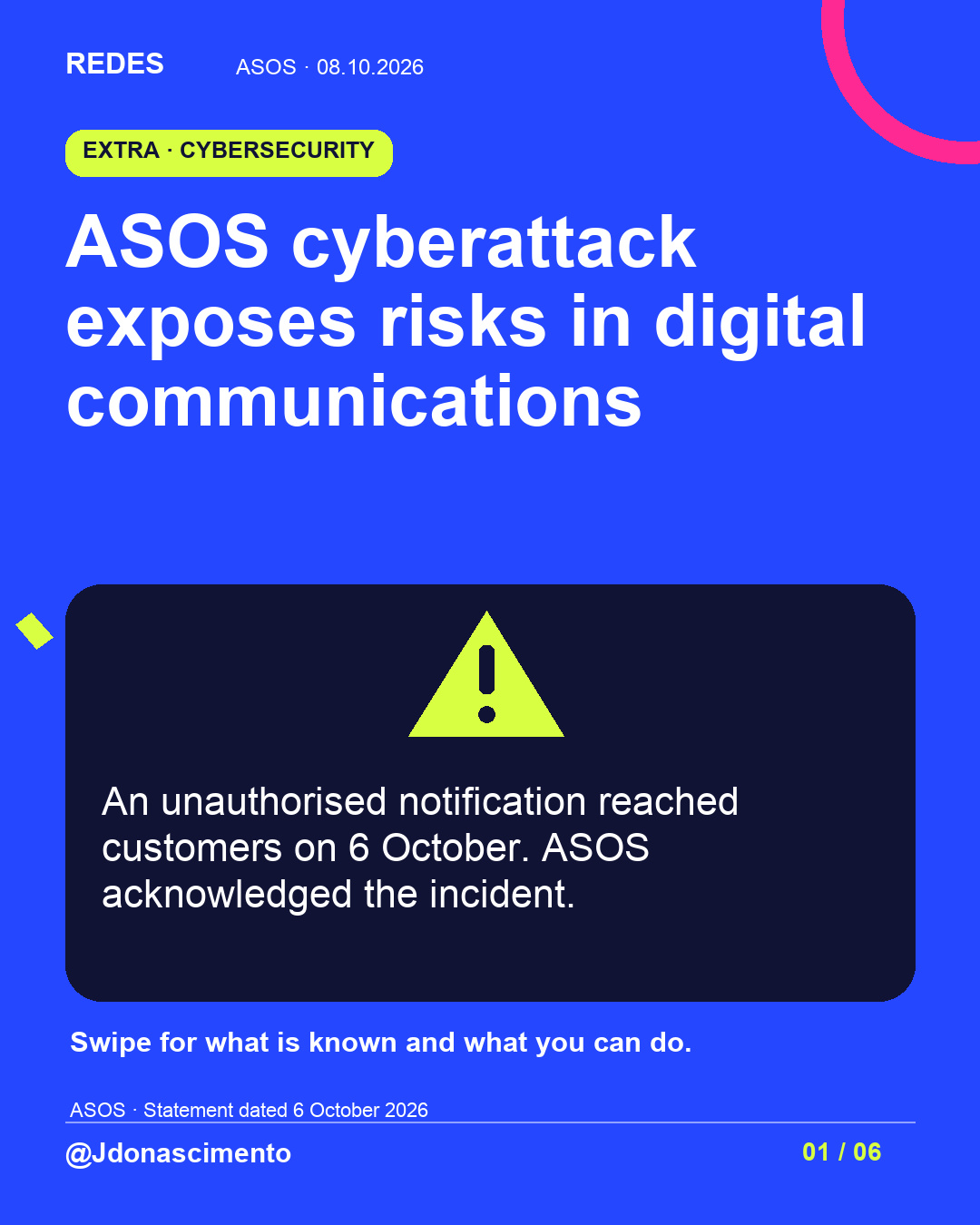
ASOS cyberattack exposes risks in digital communications
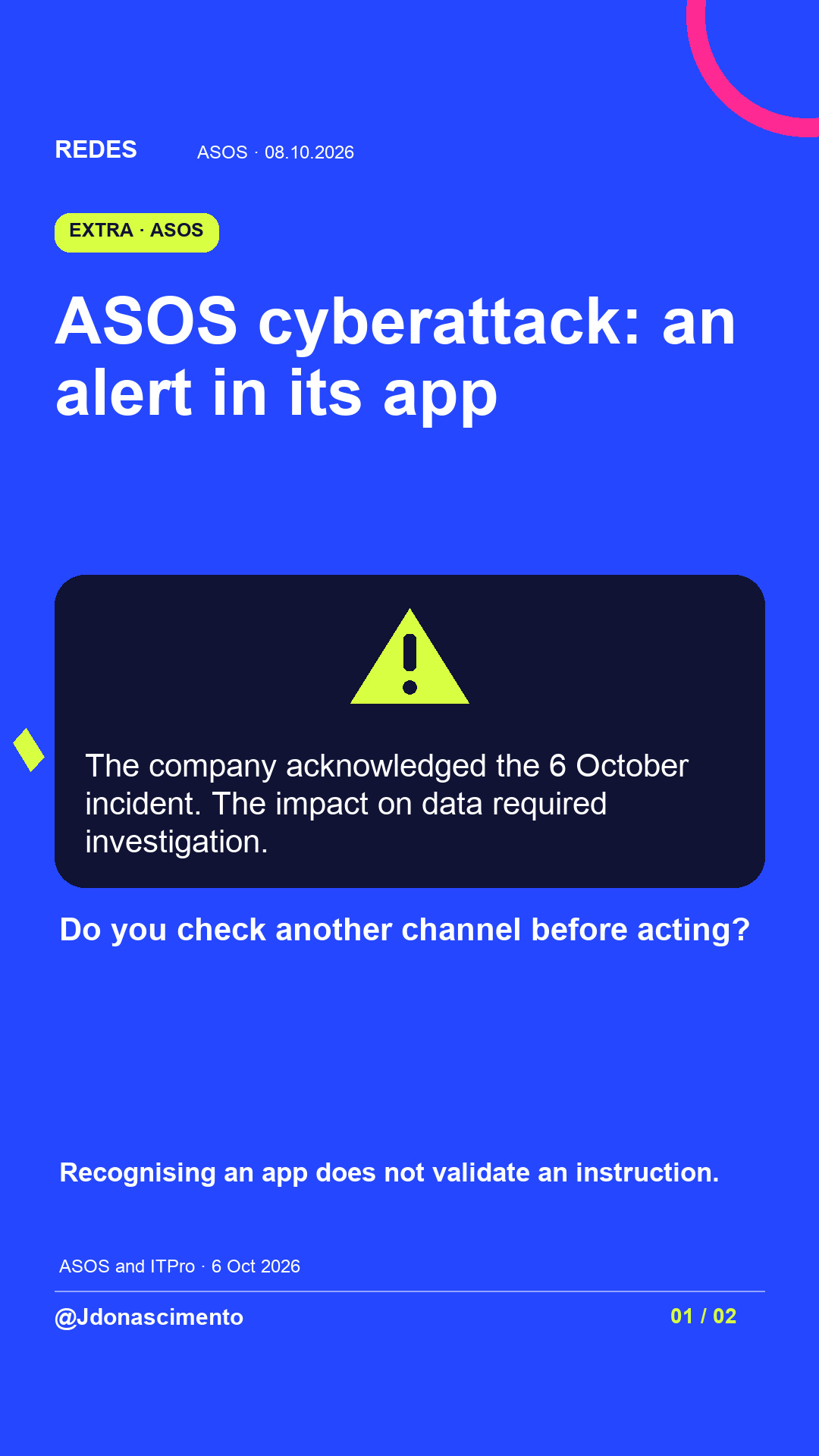
The British retailer reported unauthorised activity involving third-party communication platforms after a notification was sent on 6 October. Names and contact details may be affected.
Read related articleOriginal pieces from the 8 October 2026 social edition. They retain the content of that edition. Read the article for sources and context.
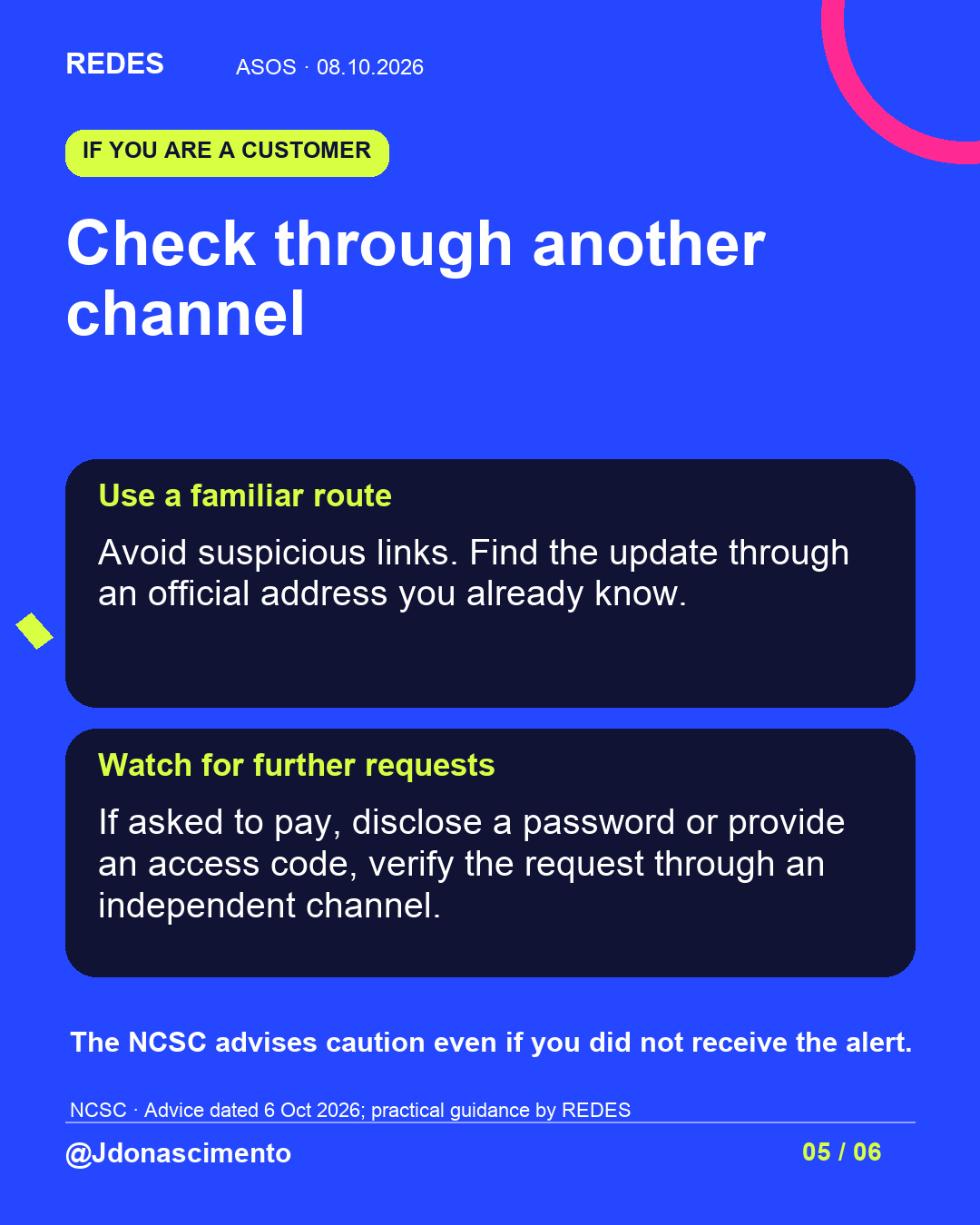
Instagram · Carousel
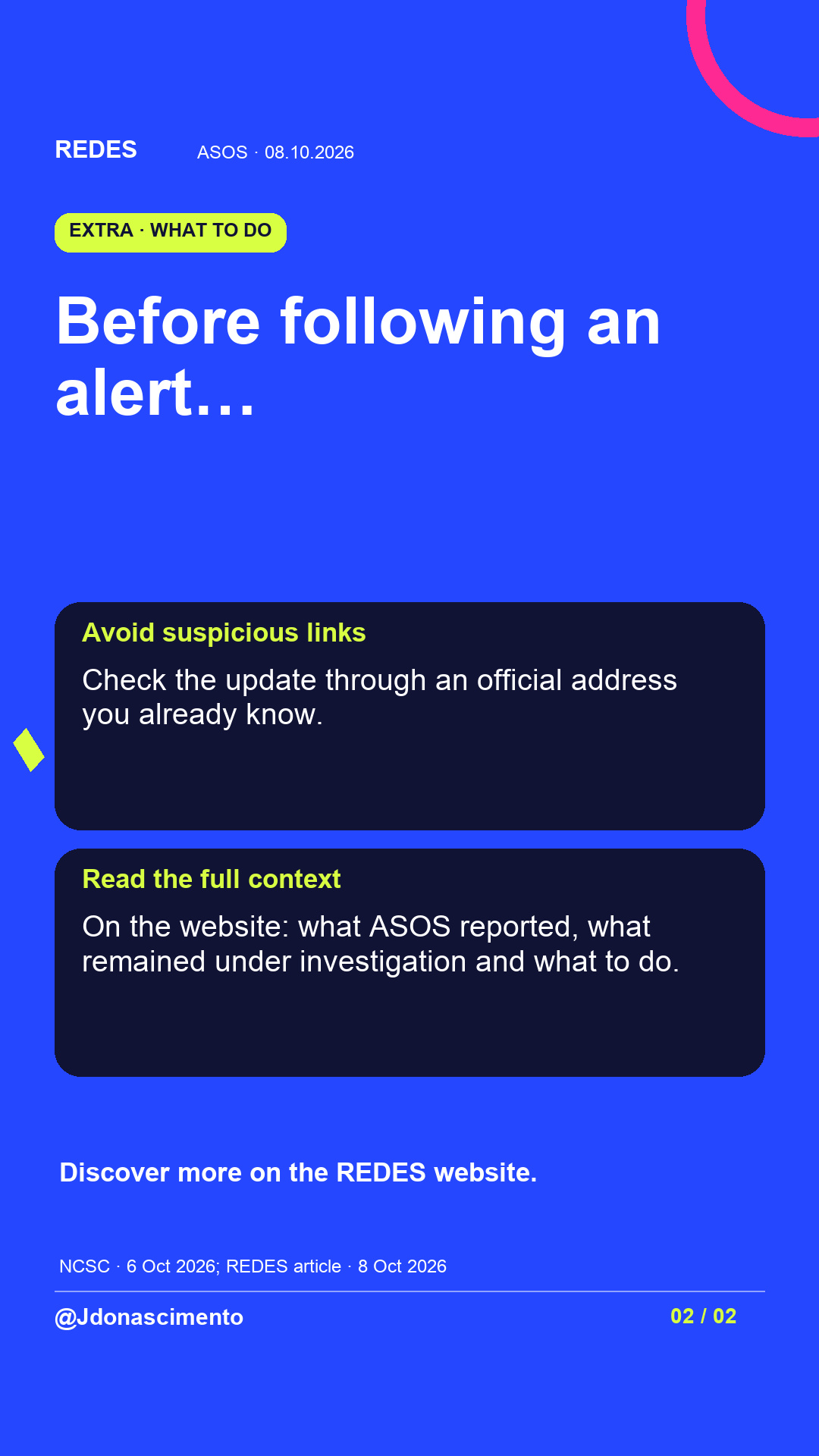
Instagram Stories
X
Instagram · Post text
Would you open an alert just because it comes from an app you recognise?
The ASOS cyberattack puts that trust to the test. Swipe to understand what the company confirmed, what remained under investigation and how to check a request before acting.
The incident occurred on 6 October. This 8 October post draws on dated statements and separates reported facts from recommendations.
Read the full article and its sources:
https://redes-jdonascimento.pages.dev/en/articles/asos-notificaciones/
Do you usually check these alerts through another channel?
Jenny Do Nascimento Gouveia / Journalist / @jdonascimento
For more content, visit: https://redes-jdonascimento.pages.dev/en/
#ASOS #Cybersecurity #DigitalCommunication
Facebook · Post text
ASOS cyberattack exposes risks in digital communications
A notification in a familiar app can feel trustworthy. The ASOS case shows why it helps to check what it is asking us to do.
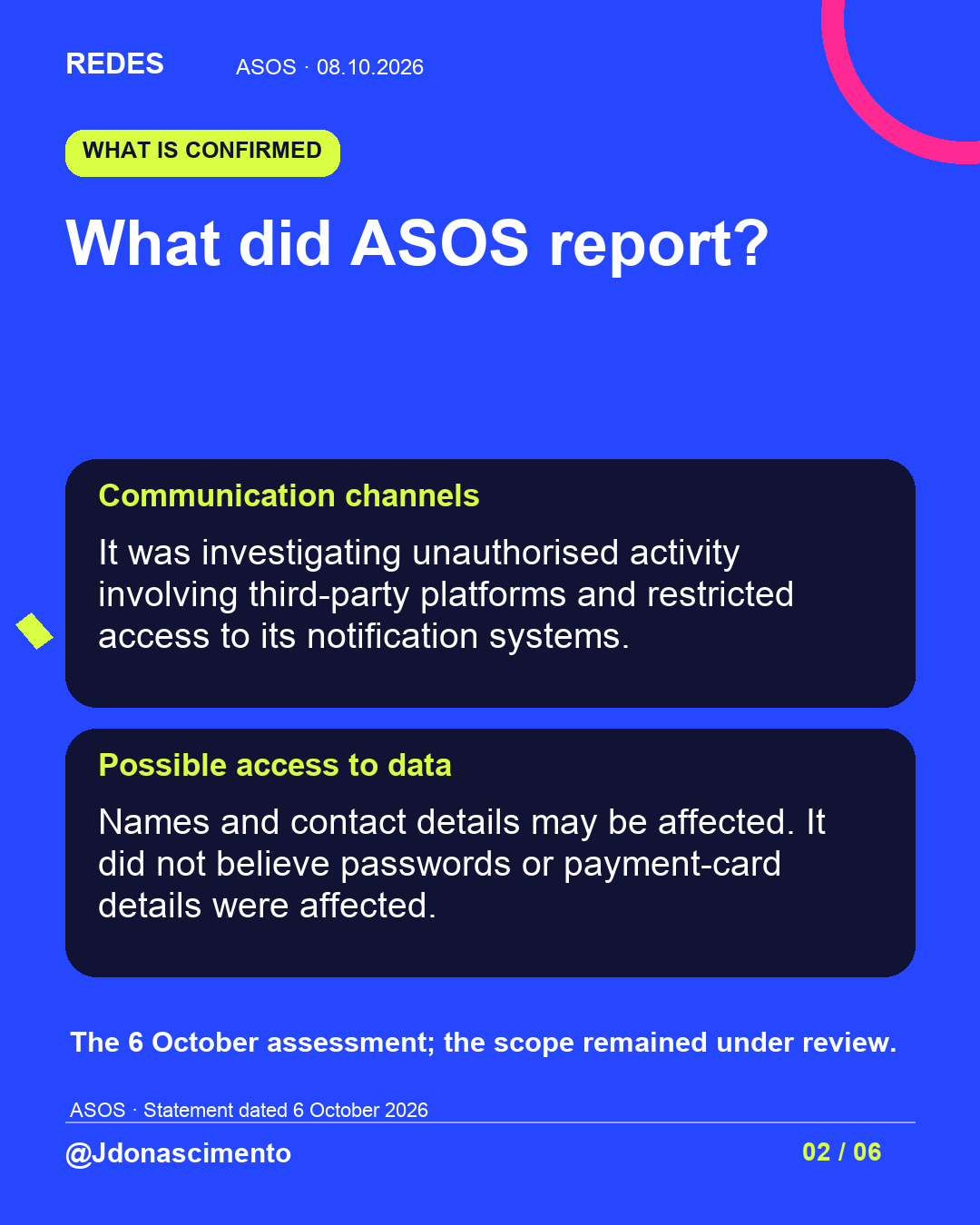
The company reported unauthorised activity involving third-party communication platforms following the 6 October alert. In its assessment that day, names and contact details may have been affected; it did not believe passwords or payment-card details were affected. This was not a final conclusion about the scope.
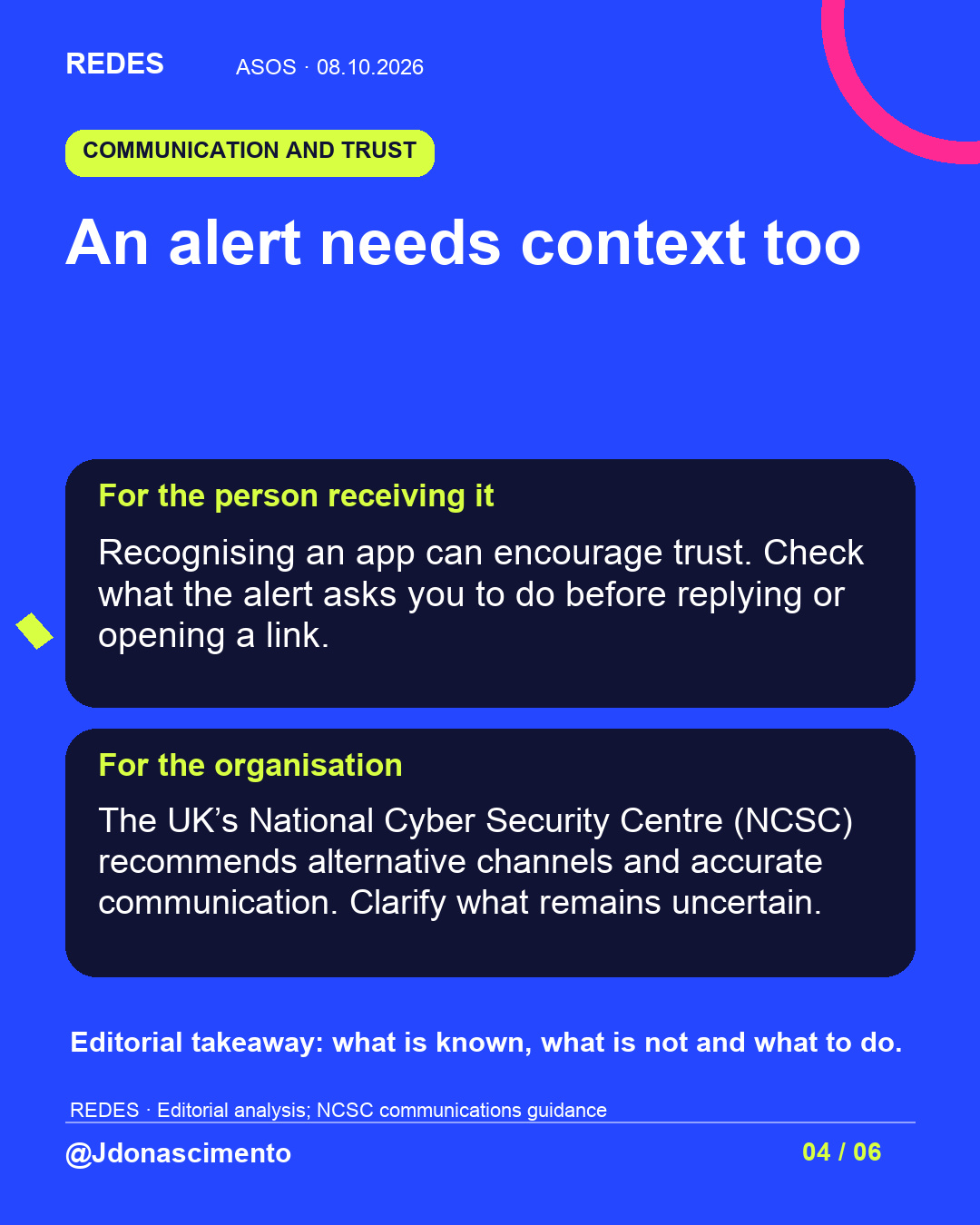
If you are a customer, avoid suspicious links and check updates through an official channel you already know. The UK’s National Cyber Security Centre (NCSC) advises taking precautions even if you did not receive the notification.
In the article, I explain what is confirmed, the questions about scope and why accurate communication matters during an incident:
https://redes-jdonascimento.pages.dev/en/articles/asos-notificaciones/
Do you use another channel to verify an alert that demands immediate action?
Jenny Do Nascimento Gouveia / Journalist / @jdonascimento
For more content, visit: https://redes-jdonascimento.pages.dev/en/
#ASOS #Cybersecurity
X · Post text
1/5 ASOS cyberattack: an unauthorised notification reached customers on 6 October. The case exposes risks in digital communications. Would recognising the app be enough for you to trust an alert?
2/5 ASOS reported activity involving third-party communication platforms. In its 6 October assessment, names and contact details may be affected; it did not believe passwords or payment-card details were affected.
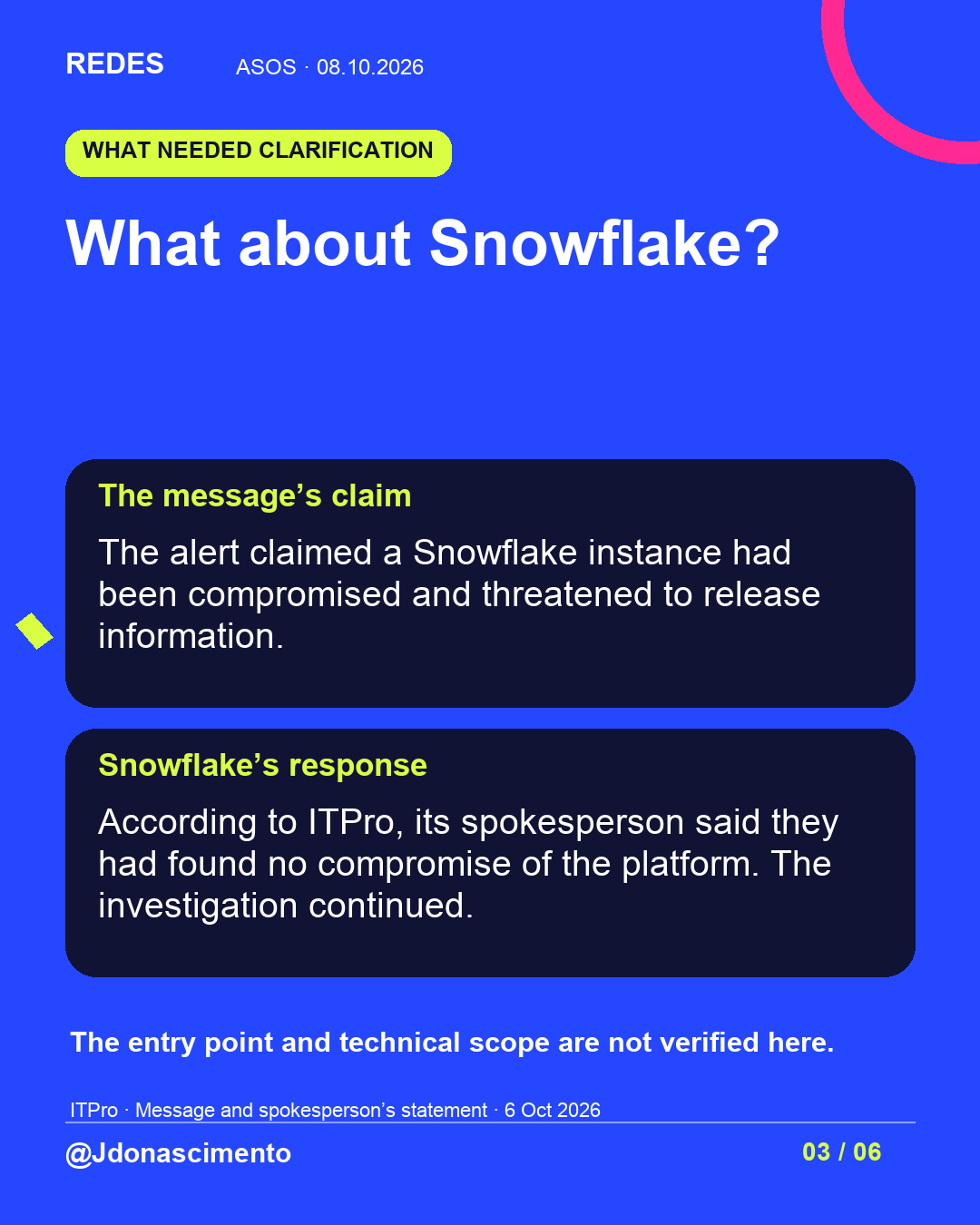
3/5 The message claimed Snowflake had been compromised. According to ITPro, Snowflake’s spokesperson said on 6 October that they had found no compromise of the platform and were still investigating. The message’s claim does not prove a data leak.
4/5 The UK’s National Cyber Security Centre (NCSC) advises caution even if you did not receive the alert. Avoid suspicious links. Verify requests for payments, passwords or codes through an independent channel. A familiar brand alone does not authenticate a request.
5/5 Read the case and its sources: https://redes-jdonascimento.pages.dev/en/articles/asos-notificaciones/
Jenny Do Nascimento Gouveia / Journalist / @jdonascimento
For more content, visit: https://redes-jdonascimento.pages.dev/en/