Cybersecurity tools: what you can check and what the results mean
Services can help investigate breaches, links and website settings. Choosing one means understanding what it examines, what data it receives and the limits of its findings.
Read related article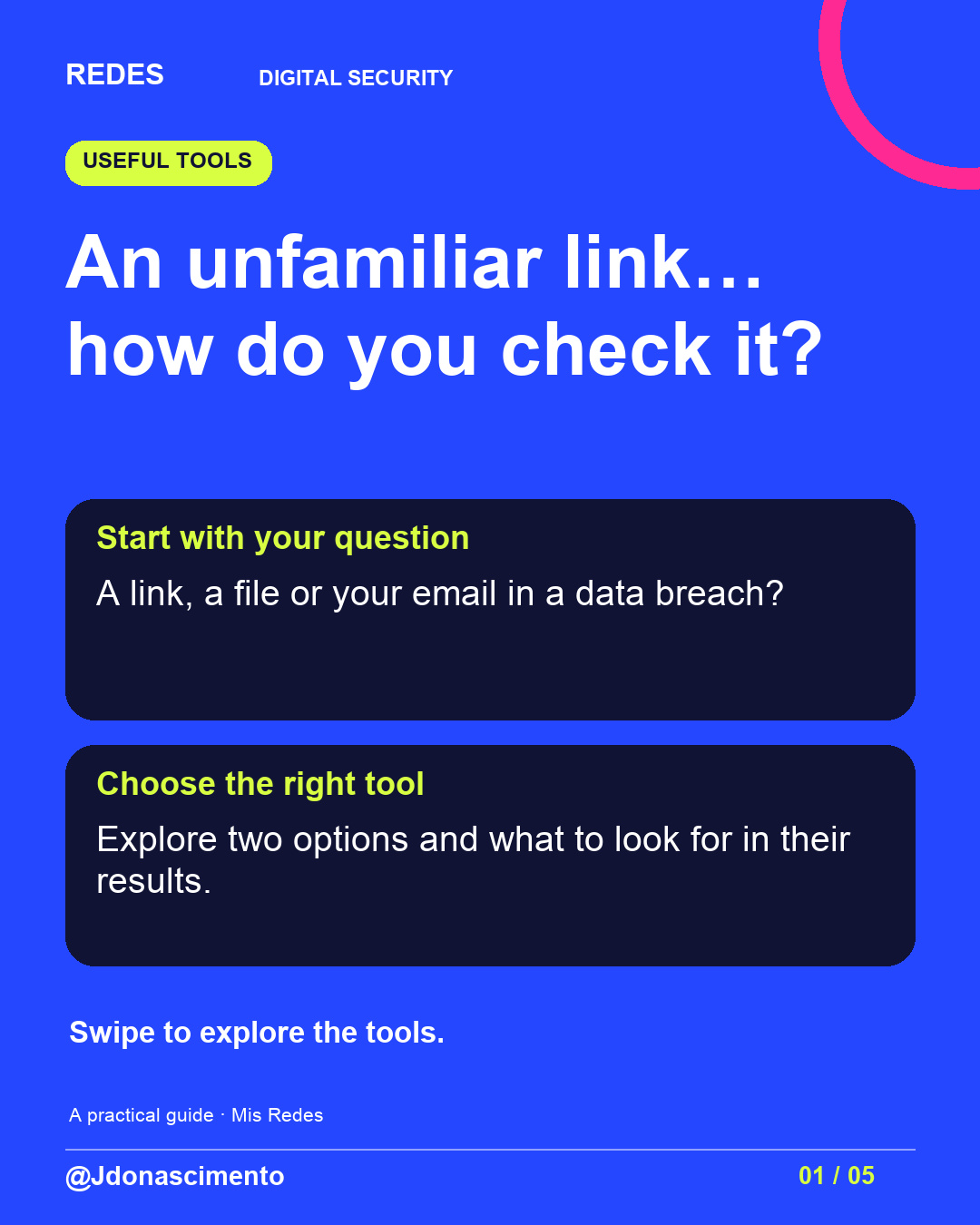
An unfamiliar link, an unexpected file or a concern about your email in a breach. Where do you start?
Swipe to explore two tools and what to look for in their results.
Want to know more? Read the article in the Articles section of our website. We explore 13 services and their limits there.
For more content, visit: https://redes-jdonascimento.pages.dev/en/
An unfamiliar link, an unexpected file or a concern about your email in a breach. Where do you start?
Swipe to explore two tools and what to look for in their results.
Want to know more? Read the article in the Articles section of our website. We explore 13 services and their limits there.
For more content, visit: https://redes-jdonascimento.pages.dev/en/
Sources: https://haveibeenpwned.com/FAQs · https://docs.virustotal.com/docs/how-it-works
X
1/5 Is that link safe? Online checks can provide useful signals. Before using them, consider what you would share and what the result can tell you. Read the thread.
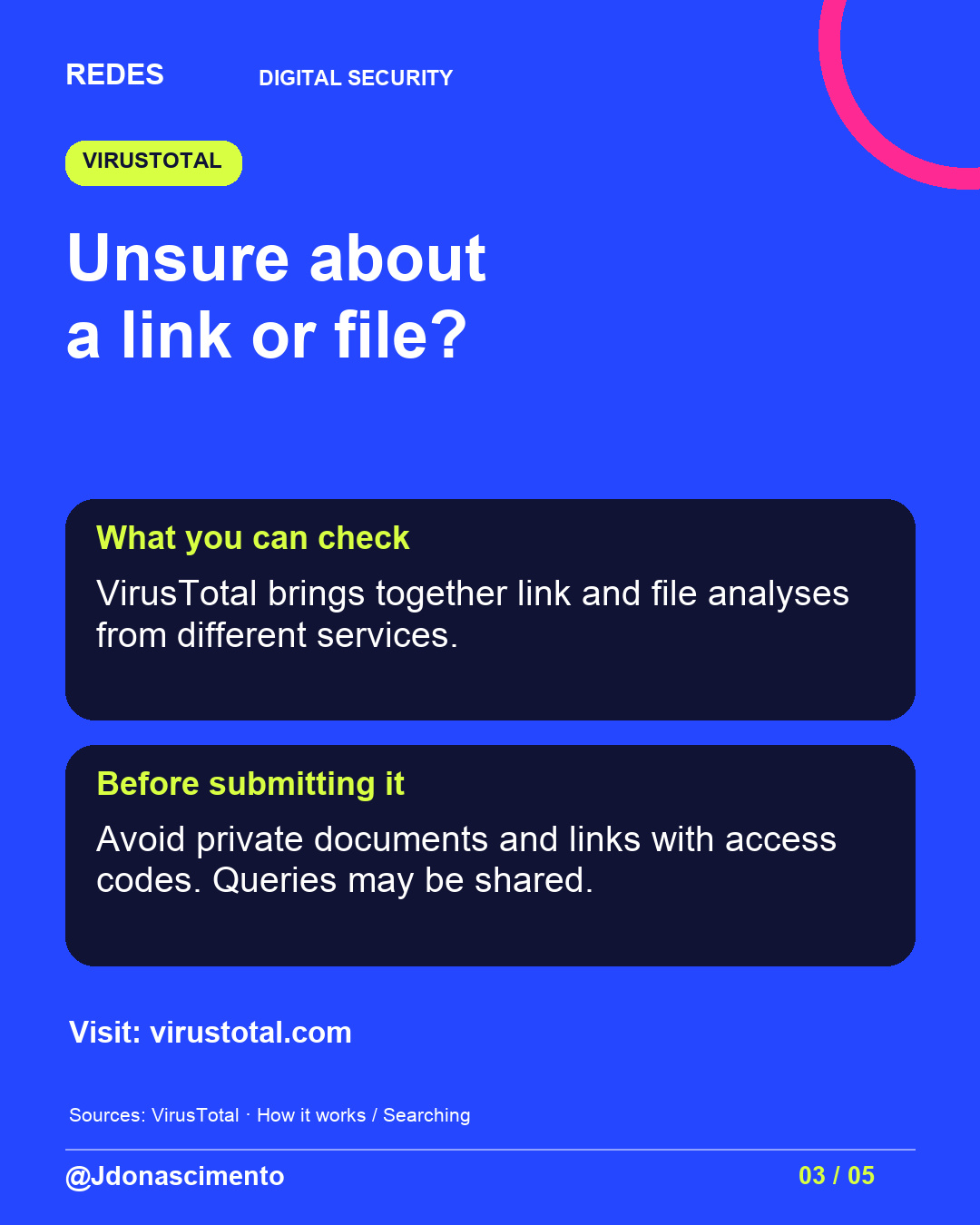
2/5 Avoid querying links containing recovery codes or personal data. VirusTotal warns that queried indicators may enter its dataset. Source: https://docs.virustotal.com/docs/searching
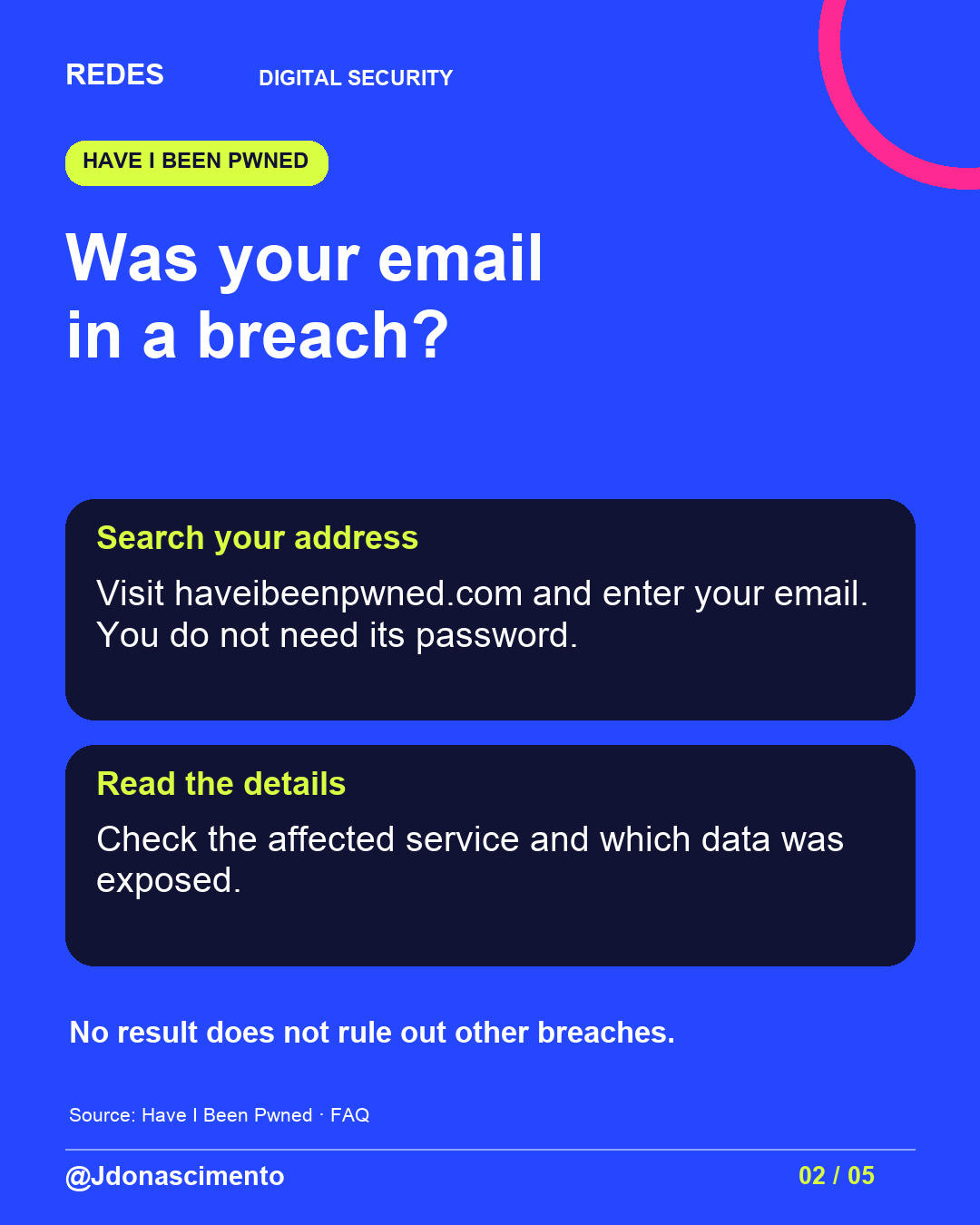
3/5 Has your email appeared in a breach? Have I Been Pwned checks the breaches in its database. No result does not rule out other breaches. Source: https://haveibeenpwned.com/FAQs
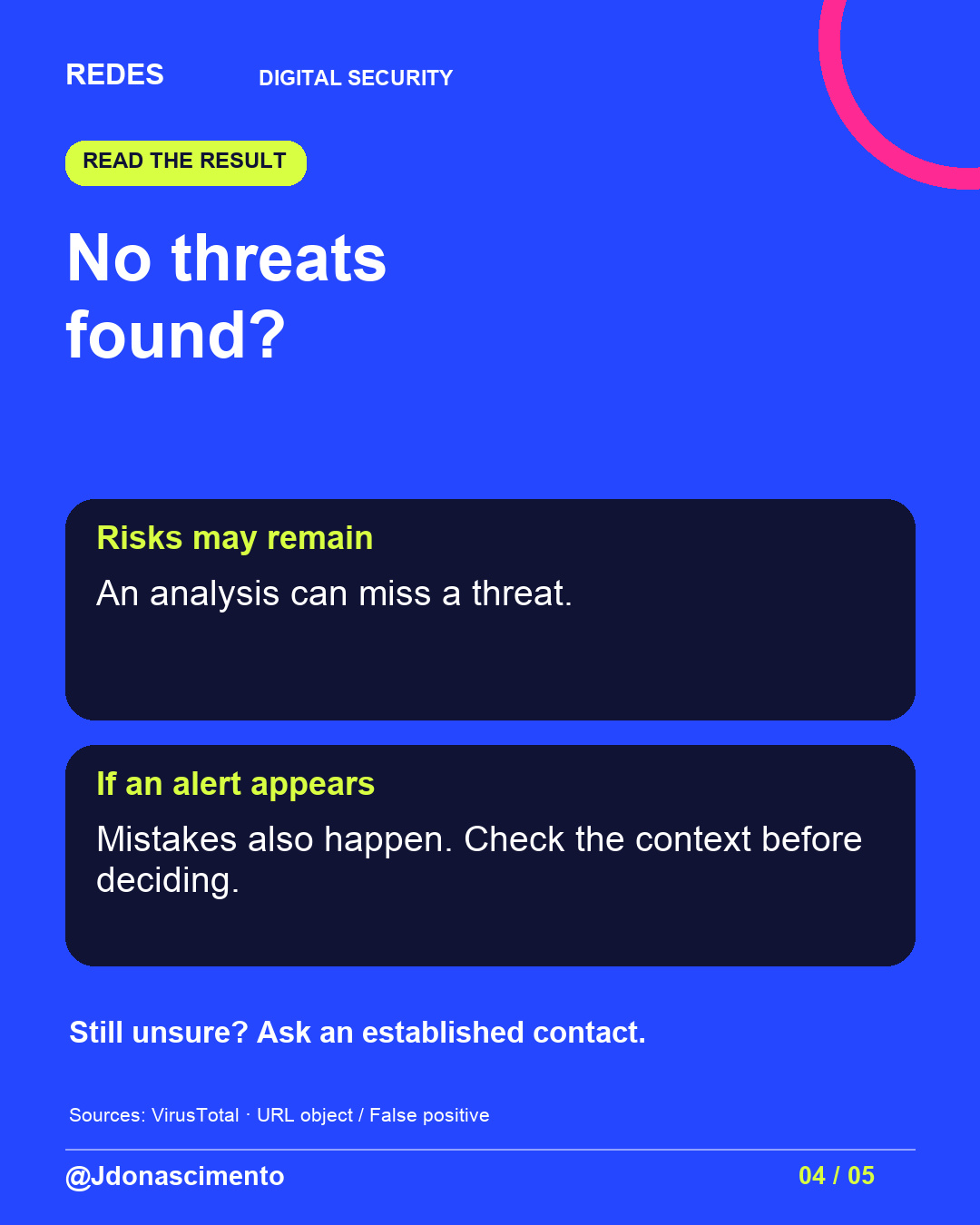
4/5 In VirusTotal, “undetected” means the engine has no assessment. False positives also occur. Results need context. Source: https://docs.virustotal.com/reference/url-object
5/5 Want to know more? Read the article in the Articles section of our website. We explore 13 services and their limits. Visit: https://redes-jdonascimento.pages.dev/en/