Is your work worth less because you used AI?
An invisible watermark can start an uncomfortable conversation. Assessing your work also means understanding your decisions, your knowledge and the rules of the task.
Read related article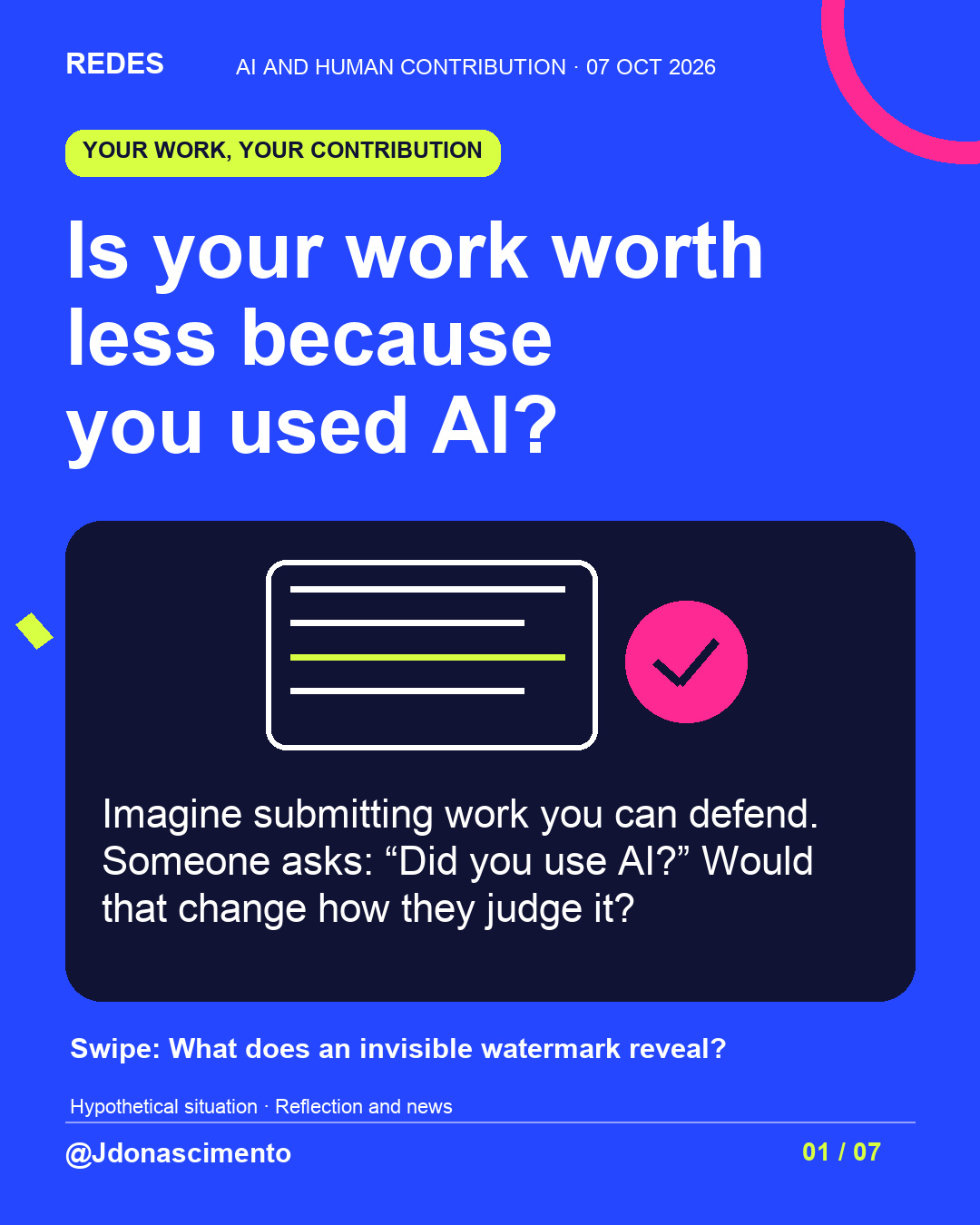
Would you think differently about a good piece of work if you knew its author had used AI? 👀
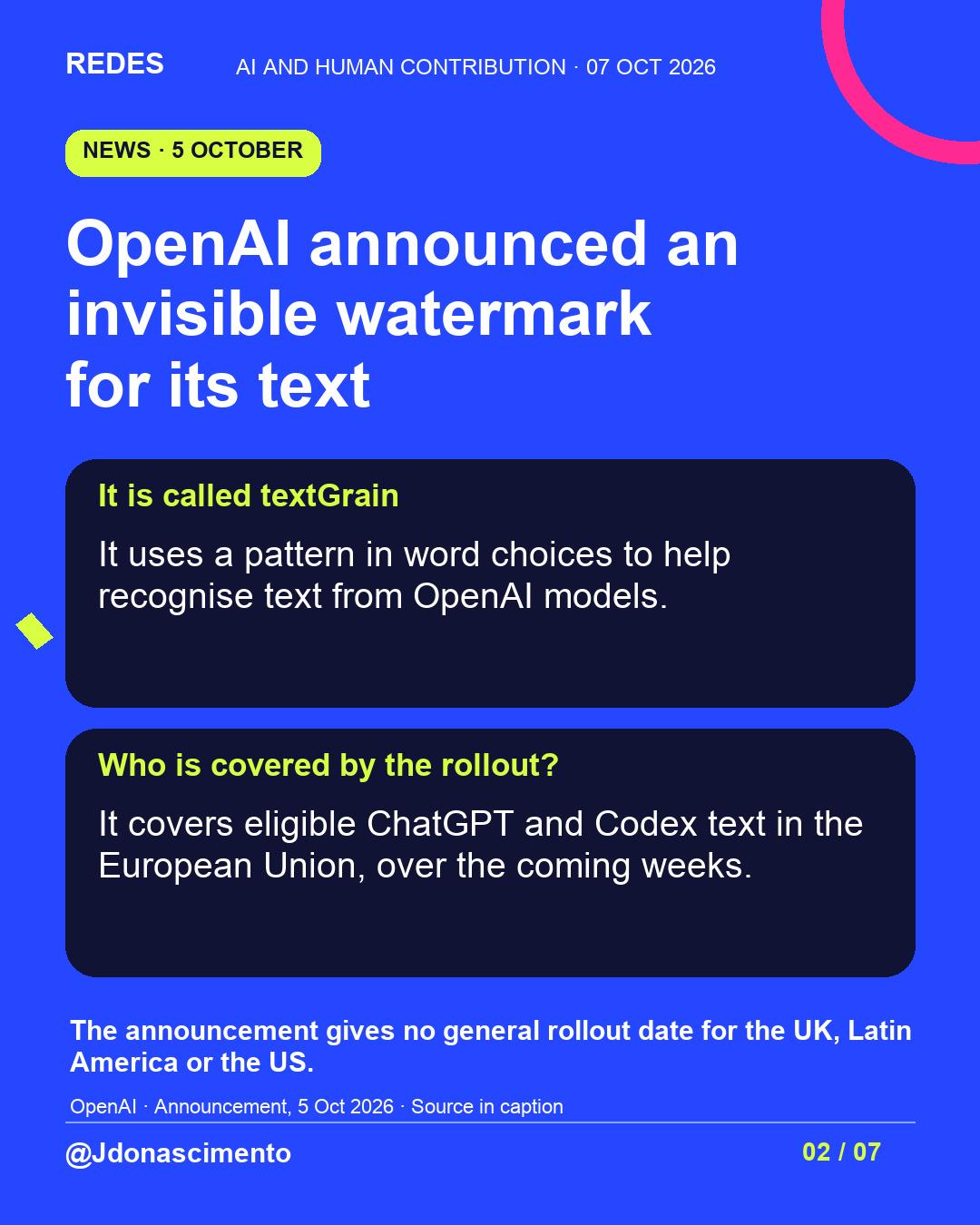
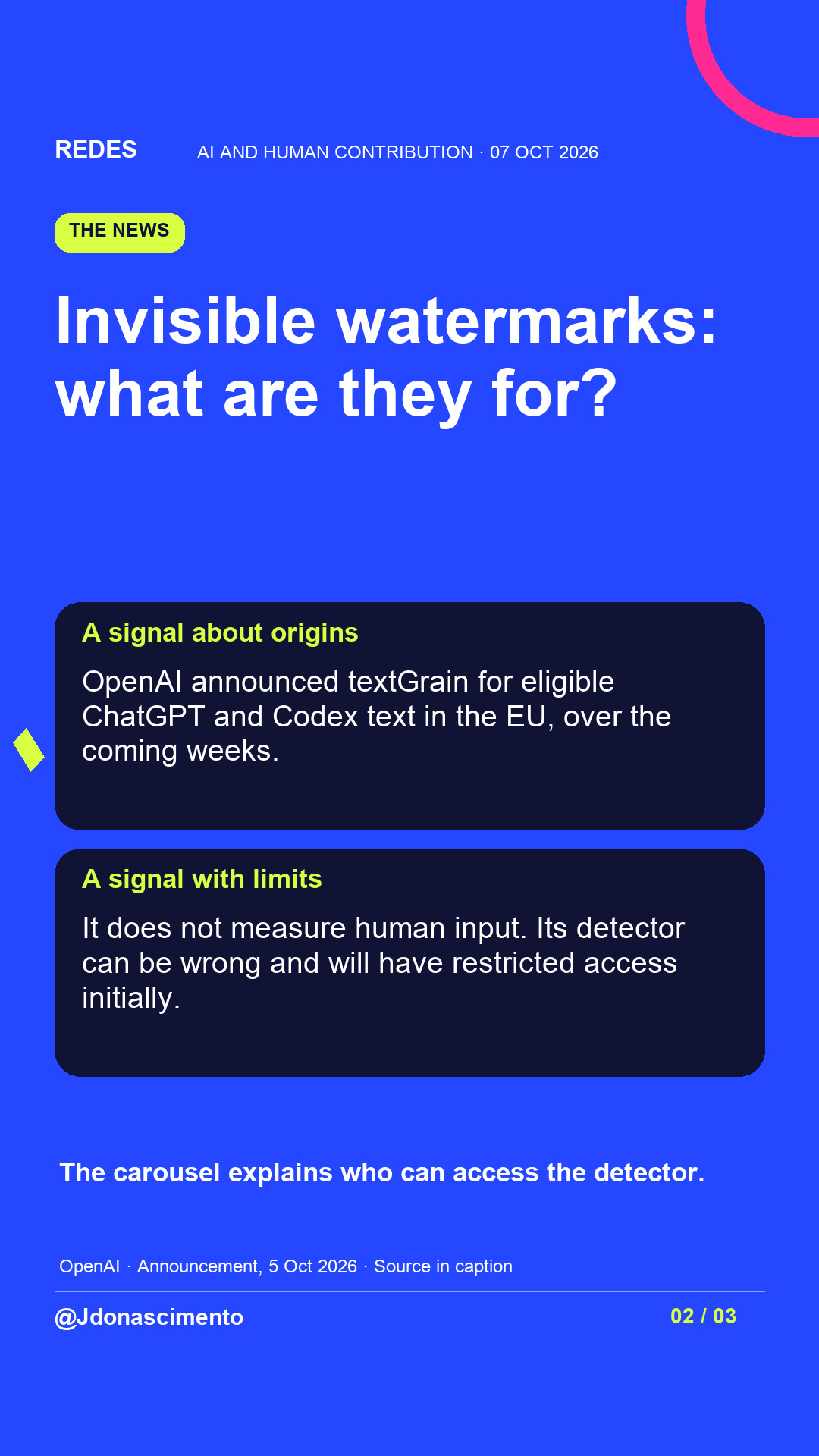
OpenAI announced this rollout for eligible ChatGPT and Codex text in the European Union.
Swipe to discover what new invisible watermarks are for, who will be able to detect them and what they can tell you about your contribution.
Which tasks would you accept AI help with?
Note: For applications connected to OpenAI through its API, whoever manages the integration can enable watermarking for supported models worldwide. It is initially disabled.
Source: OpenAI, 5 October 2026. https://openai.com/index/eu-text-provenance/
For more content, visit: https://redes-jdonascimento.pages.dev/en/
Is your work worth less because you used AI?
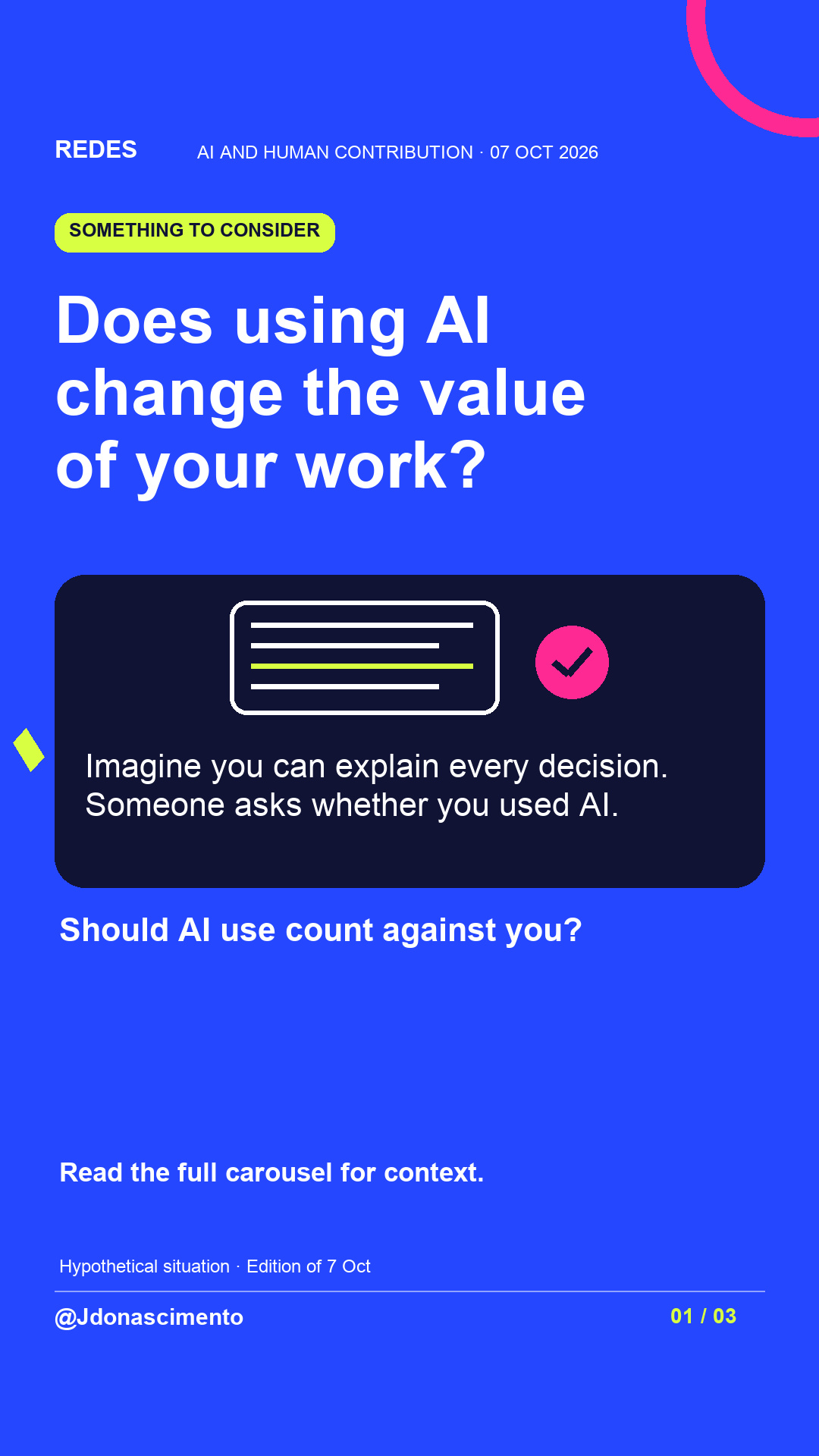
Imagine submitting a report you can explain and defend. Someone asks whether you used ChatGPT. What would they need to know to judge it fairly?
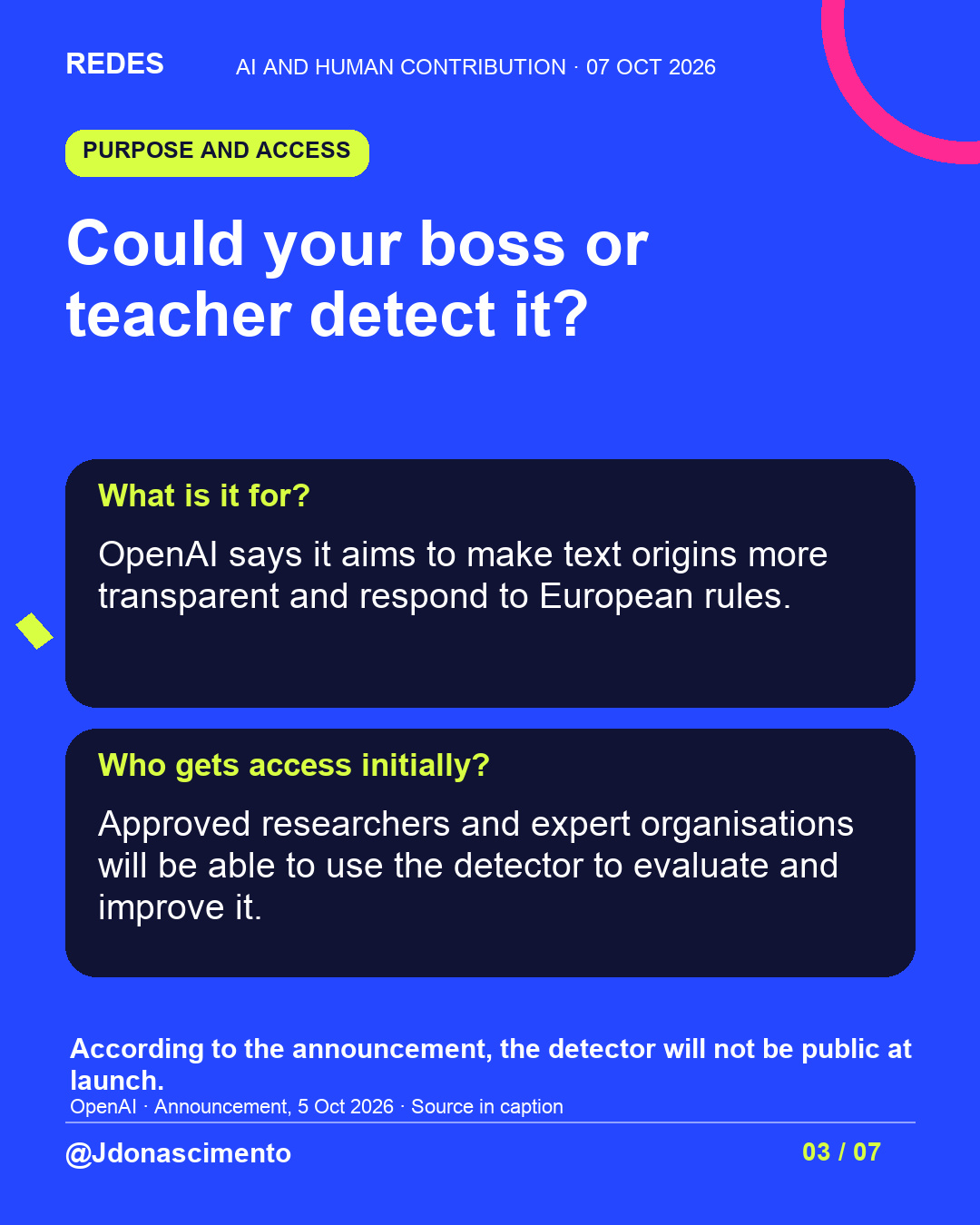
OpenAI has announced textGrain, an invisible pattern in word choices. It plans to add it to eligible ChatGPT and Codex text in the European Union over the coming weeks. Initially, detector access will be restricted to approved researchers and expert organisations.
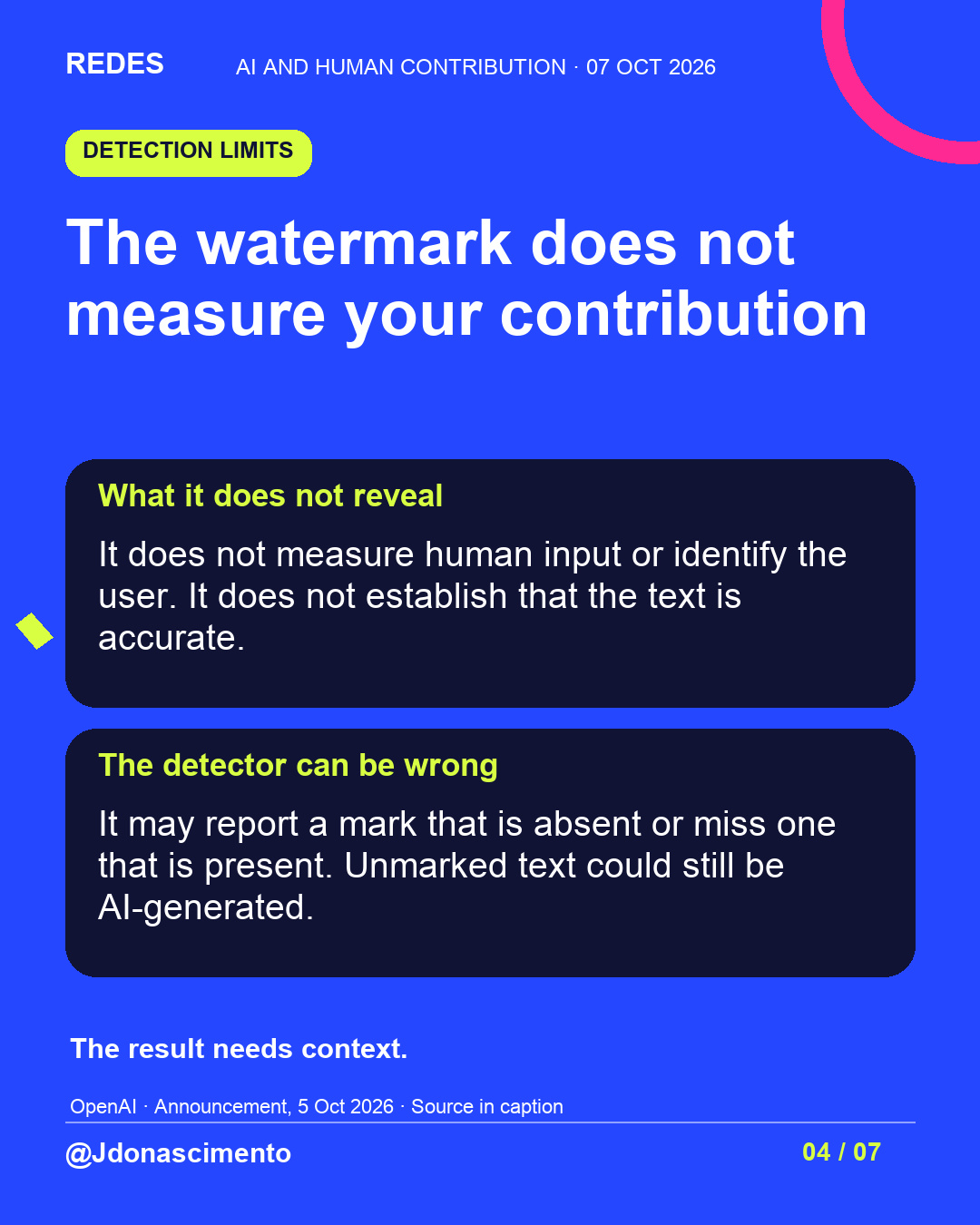
The watermark does not measure human input or establish that the text is accurate. The detector can be wrong.
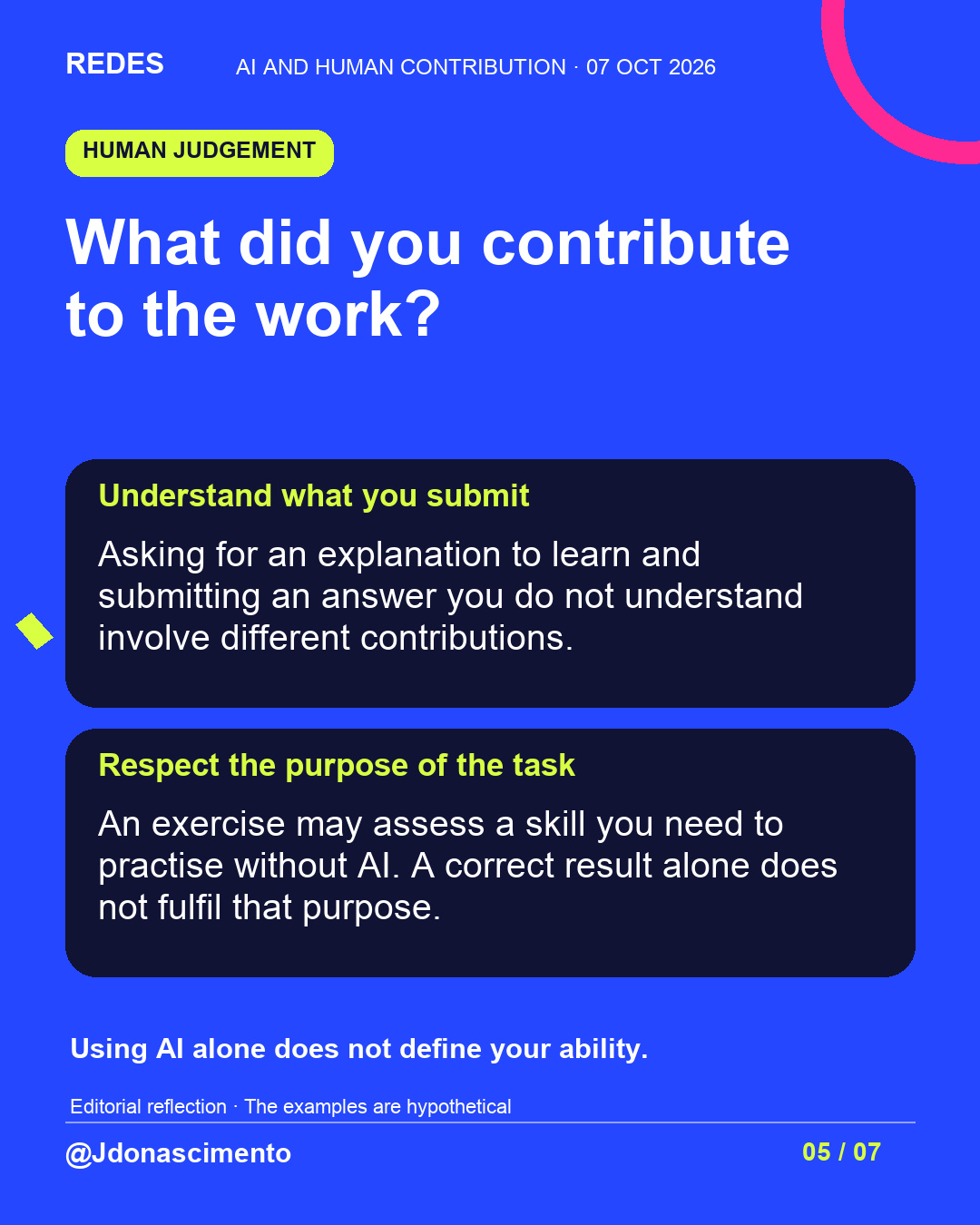
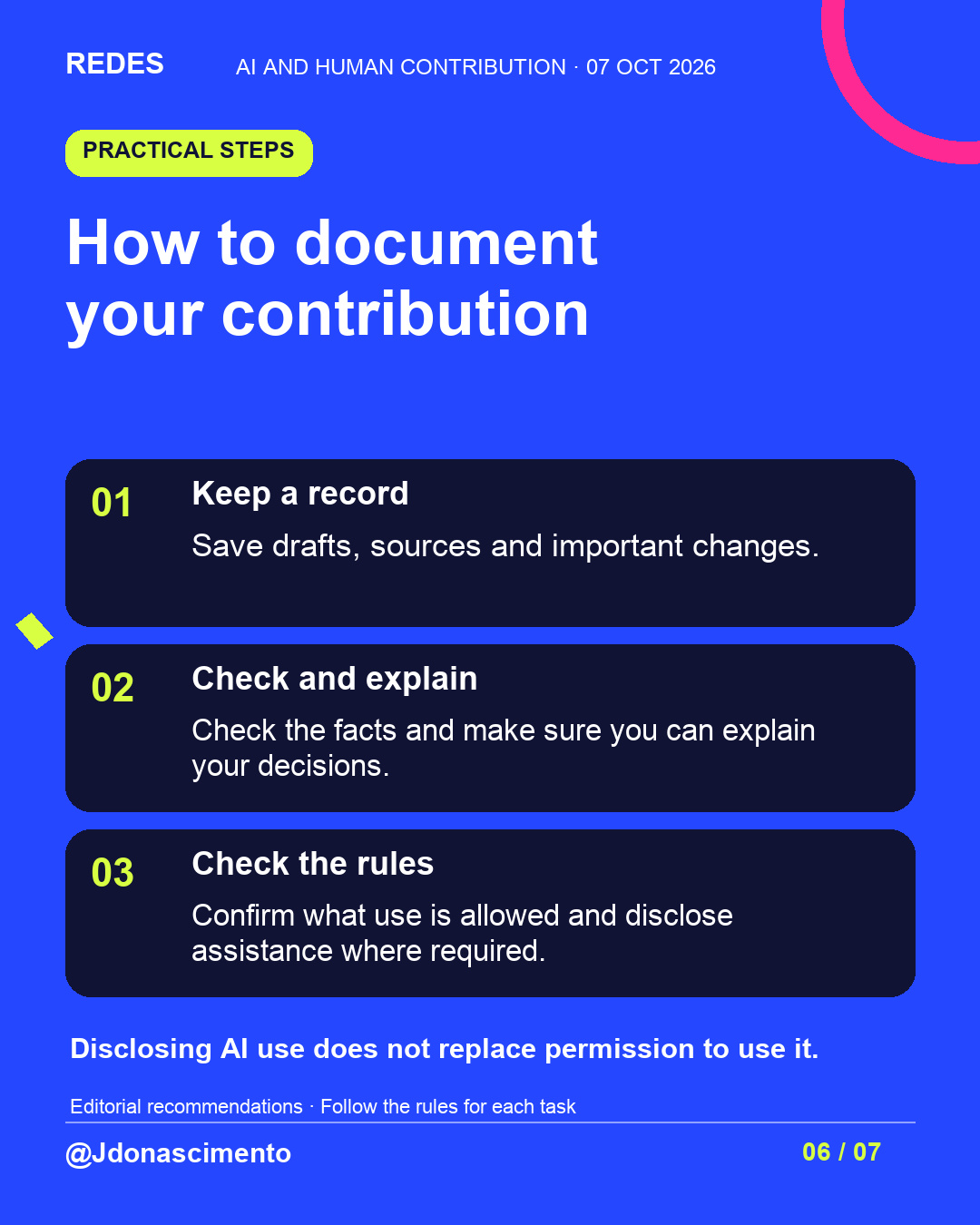
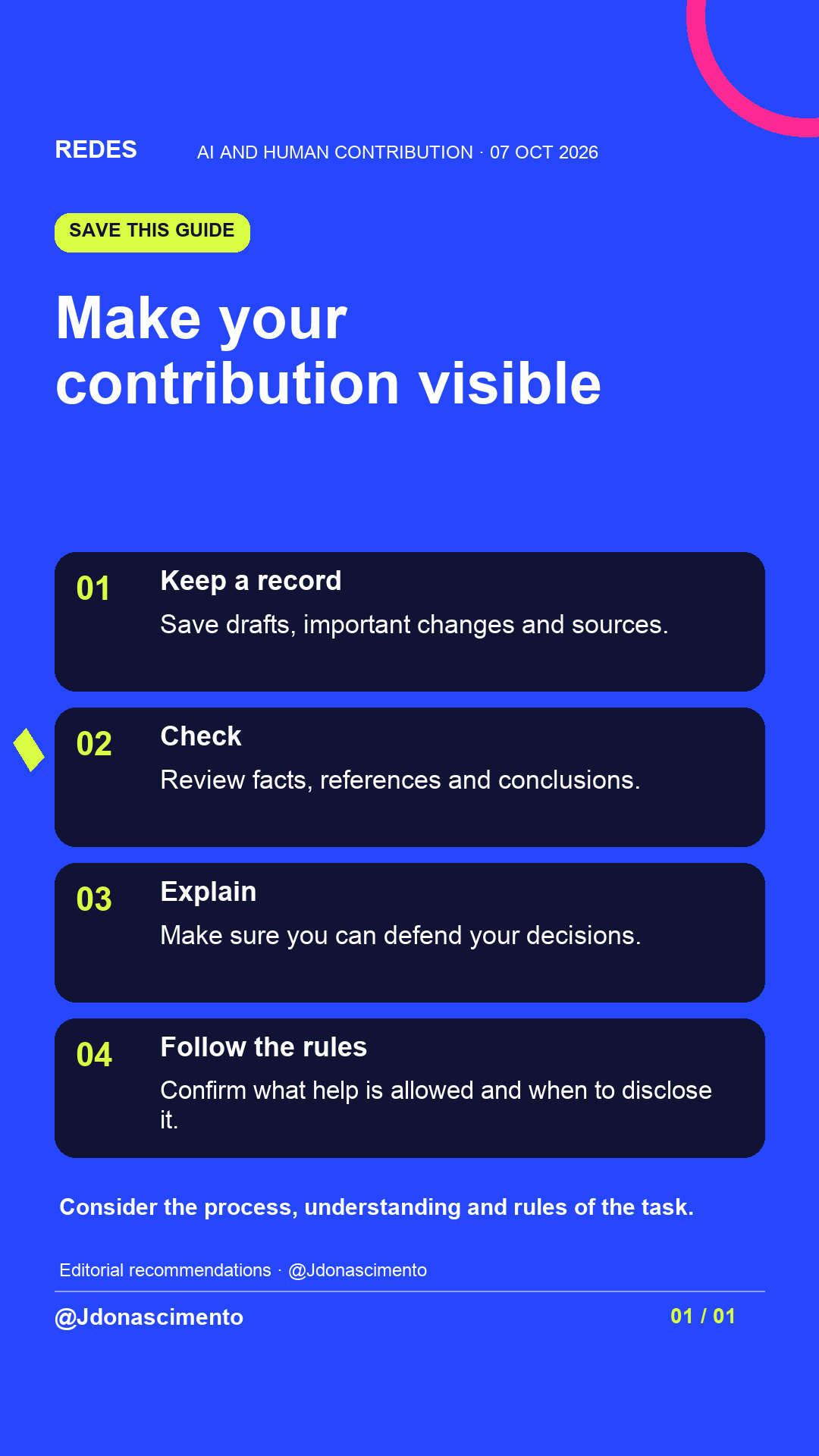
To assess the work, we suggest considering what its author understood and checked, the decisions they made and what the task allowed. Keep your drafts and sources; check what help you can use and when you need to disclose it.
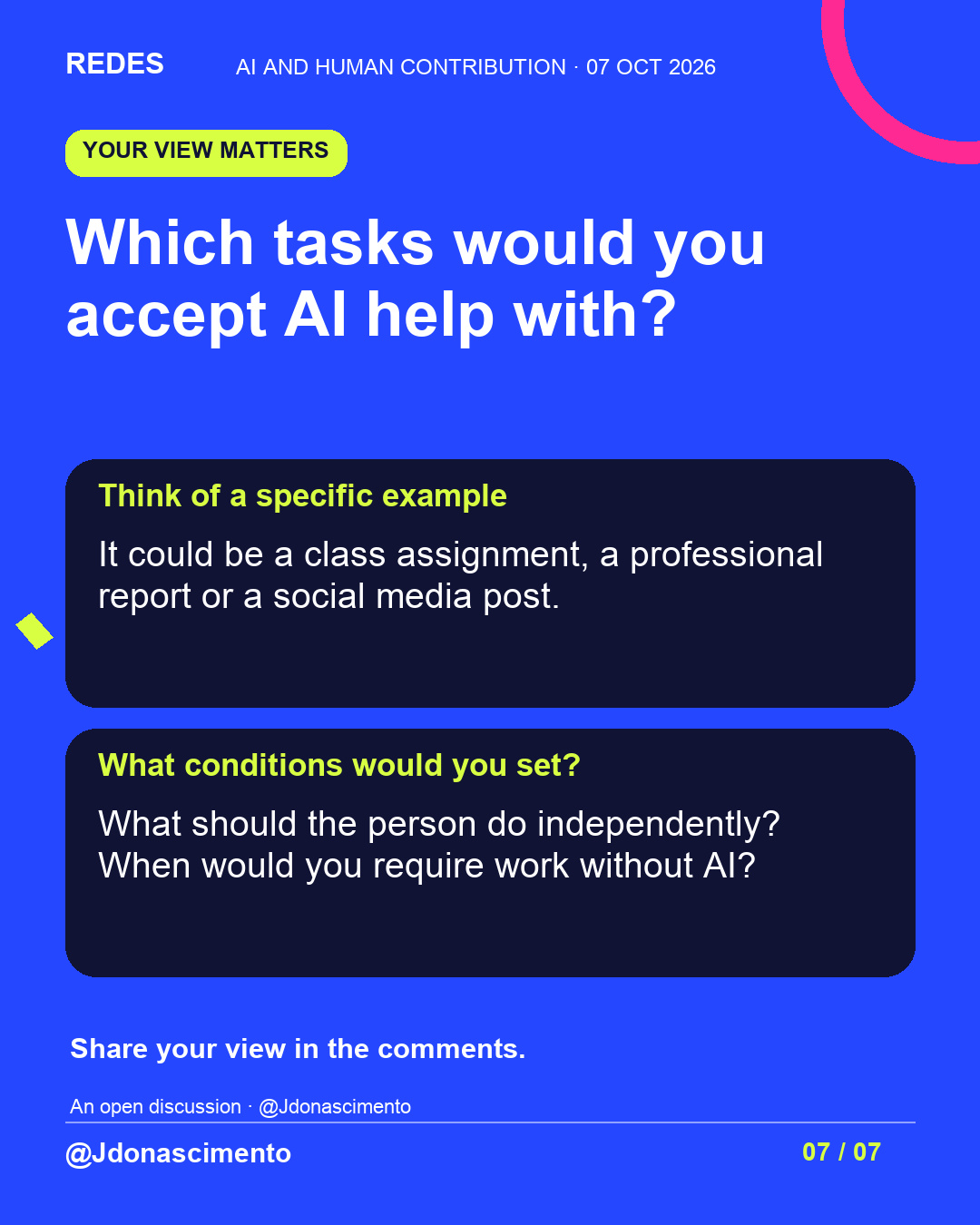
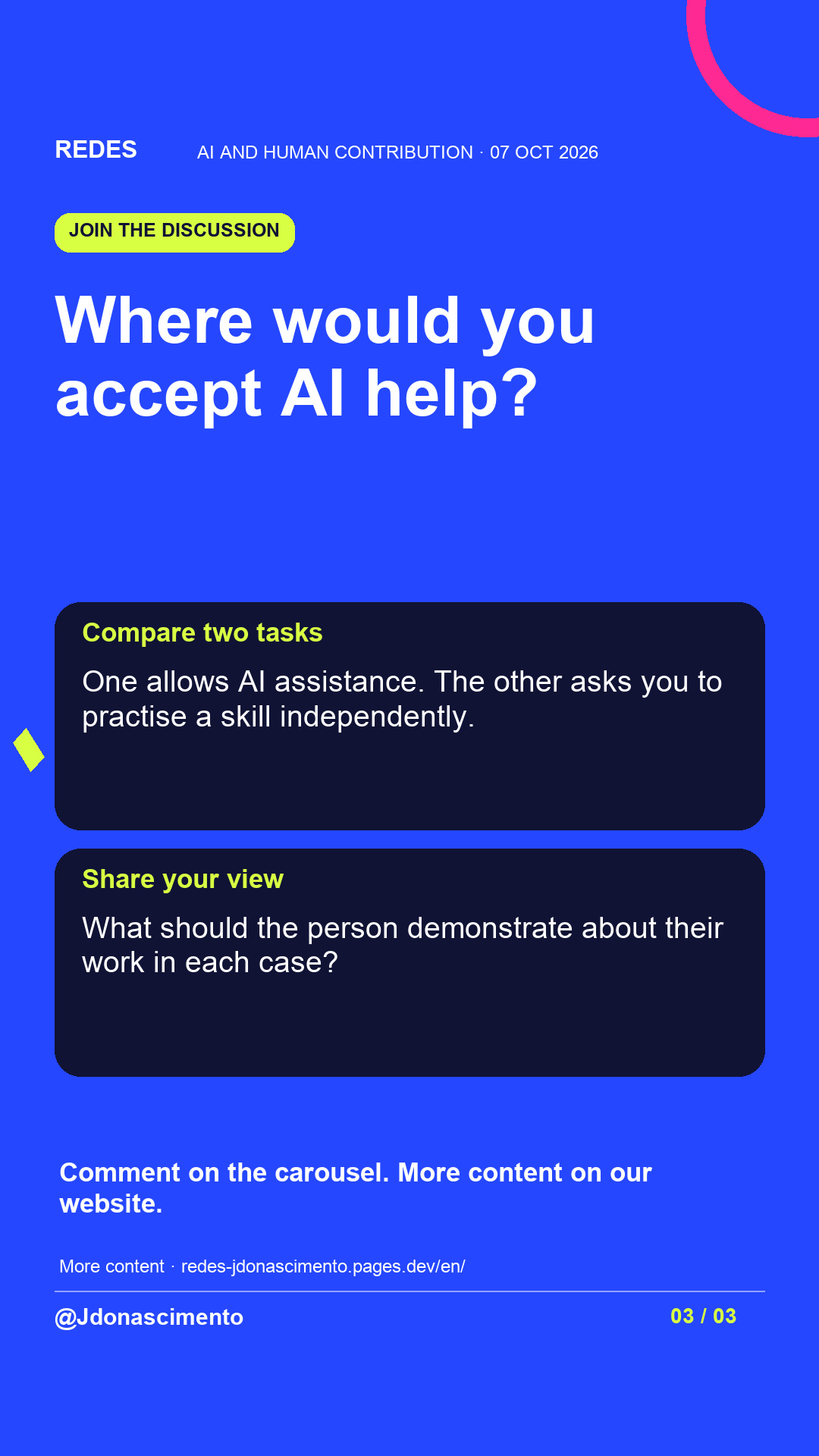
Which tasks would you accept AI help with, and which would you require people to complete without it?
Note: For applications connected to OpenAI through its API, whoever manages the integration can enable watermarking for supported models worldwide. It is initially disabled.
Source: OpenAI, announcement dated 5 October 2026. https://openai.com/index/eu-text-provenance/
For more content, visit: https://redes-jdonascimento.pages.dev/en/
X
1/7 Is your work worth less because you used AI? Imagine you can explain and defend what you submitted. Someone asks: “Did you use ChatGPT?” What would they need to know to judge it? Read the thread.
2/7 OpenAI announced watermarks for eligible ChatGPT and Codex text in the European Union, over the coming weeks. The announcement gives no general rollout date for the UK, Latin America or the US.
3/7 textGrain aims to identify text origins. OpenAI says detector access will initially be limited to approved researchers and expert organisations. Announcement, 5 Oct: https://openai.com/index/eu-text-provenance/
4/7 The watermark does not measure human input or identify the user. It does not establish accuracy. Detection can be wrong; finding no watermark does not prove human authorship.
5/7 Using AI alone does not define your ability. Understanding your work and respecting the task matter: an exercise may require you to practise a skill independently.
6/7 Document your contribution: keep drafts and sources, check the facts and explain your decisions. Check what help is allowed and when to disclose it. Disclosure does not replace permission to use AI.
7/7 Which tasks would you accept AI help with, and which would you require people to complete without it? Share an example. For more content, visit: https://redes-jdonascimento.pages.dev/en/